To advance research and development in artificial intelligence and computer science in Nepal and beyond—fostering innovation, building capacity, and nurturing a sustainable ecosystem that benefits society and promotes inclusive technological progress.
Center for Artificial Intelligence Research Nepal
Shaping the Future with AI: Research, Education, and Community Impact.
Intelligence shaped by human values.
CAIR-Nepal advances artificial intelligence through rigorous research, accessible education, and a collaborative ecosystem grounded in Nepal's context and connected to global challenges.
Research with roots.
Impact without borders.
14+Team members
11+Publications
6+Collaborations
4+Research tools
3+Open datasets
01 About the institute
Our purpose
Building an AI ecosystem that serves society.
CAIR-Nepal is a research organization dedicated to advancing artificial intelligence and computer science in Nepal and beyond.
We foster innovation, build capacity, and nurture a sustainable ecosystem that benefits society and promotes inclusive technological progress. Our work brings together technical inquiry, ethical stewardship, and community impact.
About CAIR-NepalTo become a globally recognized center of excellence in artificial intelligence research and innovation, advancing knowledge, fostering interdisciplinary collaboration, and addressing both global and context-specific challenges through responsible and impactful technological development.
Empower communities through knowledge, technology, service, compassion, and ethical stewardship.
02 Our foundation
Knowledge in service
Wisdom, compassion, and ethical stewardship.
CAIR-Nepal is committed to advancing AI for social good by empowering communities through knowledge, technology, and ethical stewardship—guided by the enduring wisdom of the Bhagavad Gita and the principles of service and grace from the Bible.
Bhagavad Gita wisdomश्रेयान्द्रव्यमयाद्यज्ञाज्ज्ञानयज्ञः परन्तप।
"The sacrifice of knowledge is superior to material offerings. All actions culminate in knowledge." — Bhagavad Gita 4.33
सर्वं कर्माखिलं पार्थ ज्ञाने परिसमाप्यते॥
Biblical principles"Each of you should use whatever gift you have received to serve others, as faithful stewards of God's grace in its various forms."
— 1 Peter 4:10
KnowledgeCompassionServiceEthicsCommunity
02 Research
Research spotlight
Ideas with impact.
Our research addresses both foundational questions and urgent societal challenges, with an emphasis on accountable and inclusive AI.
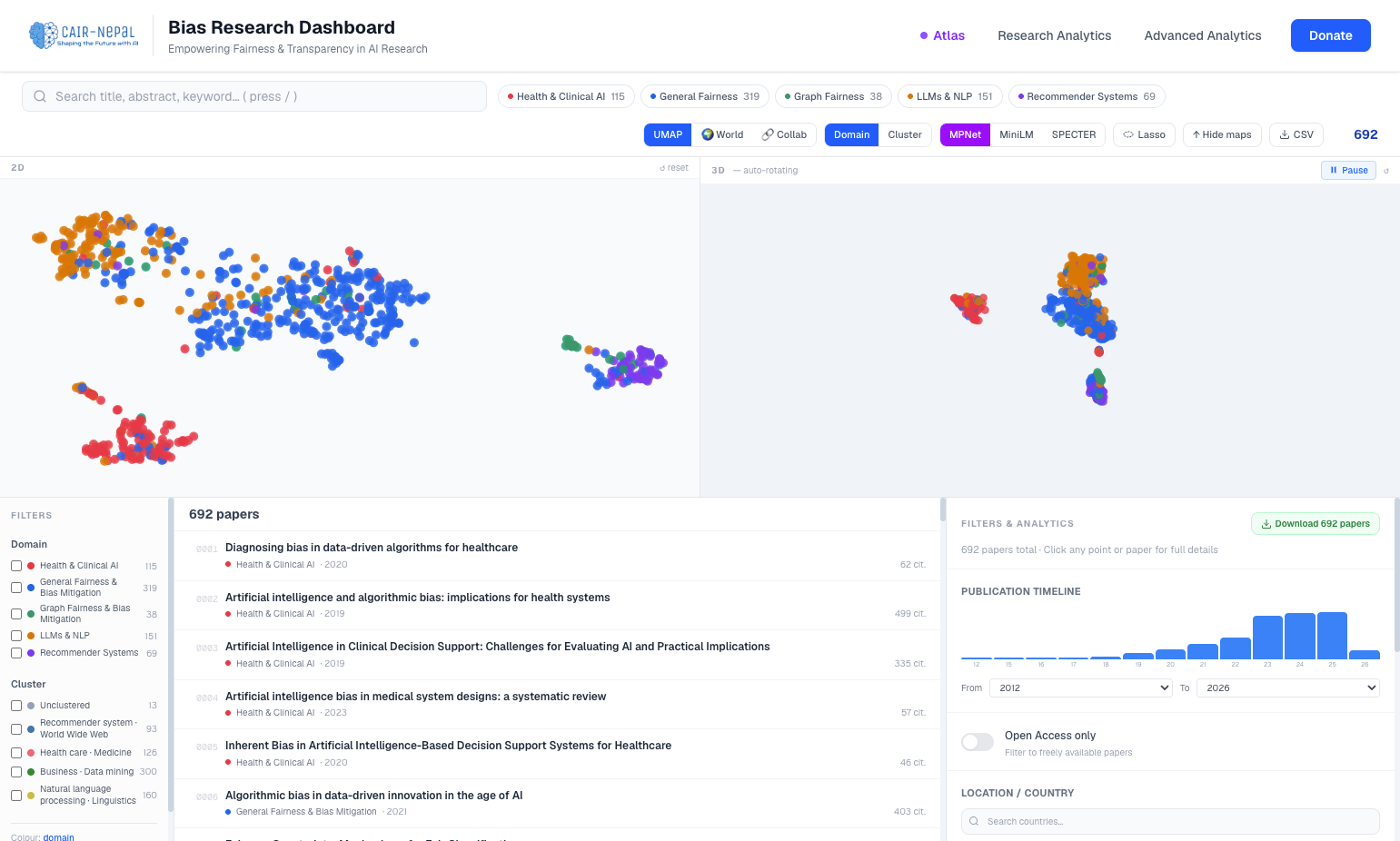
Whose fairness? Structural concentration in AI bias research
Abhash Shrestha and Subigya Gautam and Anu Sapkota and Sanju Tiwari and Tek Raj Chhetri. (2026). Whose fairness? Structural concentration in AI bias research.
Read the researchDual-Metric Evaluation of Social Bias in Large Language Models: Evidence from an Underrepresented Nepali Cultural Context
Ashish Pandey and Tek Raj Chhetri. (2026). Dual-Metric Evaluation of Social Bias in Large Language Models: Evidence from an Underrepresented Nepali Cultural Context.
Read the researchSpotlight projects · 2 selected
01 · Ongoing
AI In Education
This project investigates the extent to which AI can enable personalized learning, especially in low-resource educational settings.
View project → 02 · OngoingHeritageGraph: Illuminating Cultural Legacies Through Knowledge Graphs
A scalable framework for cultural heritage knowledge representation using knowledge graphs and Agentic AI, with Nepalese cultural heritage as the …
View project →Our research areas
The featured work is one expression of a broader research portfolio. Across 6 connected areas, CAIR-Nepal links foundational AI inquiry with Nepal's social, educational, health, and institutional priorities.
01
→
02
→
03
→
04
→
05
→
06
→
Knowledge Representation & Reasoning
The objective of Knowledge Representation and Reasoning is to conduct research on how knowledge can be …
Responsible AI
The objective of responsible AI is to conduct research that focuses on the design of fair …
Applied AI
Applied AI research looks at how AI can be used to solve problems in the real …
Human-centered AI
Human-centered AI research focuses on designing AI with human-centricity, teaming AI with humans as opposed to …
Digital Healthcare
The goal of digital healthcare research is to explore the application of AI in healthcare such …
Social Computing
Social computing is the study of how people interact with technology to communicate, collaborate, and share …
03 Knowledge Hub
Open knowledge
Research made useful.
A single gateway to publications, datasets, tools, learning resources, and insights about Nepal's evolving AI ecosystem.
Publications
Peer-reviewed articles, book chapters, preprints, and policy research.
Explore library →Datasets
Documented research data supporting open and reproducible inquiry.
Browse datasets →Software & tools
Research code, interactive dashboards, and practical resources.
View tools →Learning
Courses, materials, scholarships, and certificate verification.
Start learning →04 Latest work
Recent contributions
New from CAIR-Nepal.
Book Chapter
Artificial Intelligence in Nepal's Education System: Policy Directions and Implementation Challenges
Sapkota, Anu and Karki, Niraj and Chhetri, Tek Raj. (2026). Artificial Intelligence in Nepal's Education System: Policy Directions and Implementation Challenges. Encyclopedia of Educational Innovation, Springer …
Preprint
Whose fairness? Structural concentration in AI bias research
Abhash Shrestha and Subigya Gautam and Anu Sapkota and Sanju Tiwari and Tek Raj Chhetri. (2026). Whose fairness? Structural concentration in AI bias research.
Preprint
Dual-Metric Evaluation of Social Bias in Large Language Models: Evidence from an Underrepresented Nepali Cultural Context
Ashish Pandey and Tek Raj Chhetri. (2026). Dual-Metric Evaluation of Social Bias in Large Language Models: Evidence from an Underrepresented Nepali Cultural Context.
Education & capacity
Learn the ideas shaping our future.
CAIR-Nepal Academy makes AI education, research practice, and emerging knowledge accessible to students and professionals.
05 Network
Collaborators & partners
Progress is collective.
We work with academic and industry partners to advance research, build capacity, and translate knowledge into impact.
Sunway College Kathmandu
The Center for Artificial Intelligence Research Nepal (CAIR-Nepal), Tech Journos Forum (TJF), and Sunway …
Edtraa
CAIR-Nepal and Edtraa have signed a Memorandum of Understanding (MoU) to collaborate on the …
Sunway College
Sunway College and CAIR-Nepal have signed a Memorandum of Understanding (MoU) to collaborate on …
Get involved
Build meaningful technology with CAIR-Nepal.
Whether you are beginning your research journey or seeking an institutional partner, there is a place to contribute.
For students
Internships
Gain practical research experience alongside the CAIR-Nepal team.
Explore → For researchersResearch opportunities
Contribute expertise to interdisciplinary and locally relevant inquiry.
Explore → For institutionsCollaborate
Develop joint research, education, and knowledge initiatives.
Explore → For the communityVolunteer & connect
Support events, learning, communication, and community programs.
Contact us →06 People
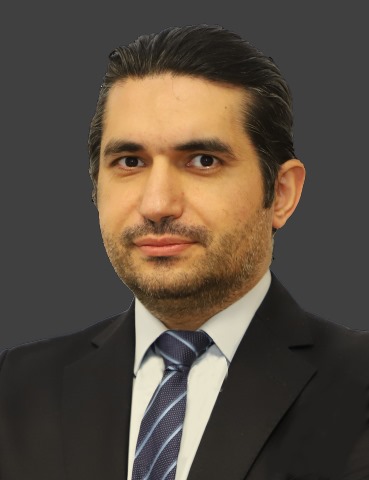
Research team
A multidisciplinary community.



07 Media
Coverage
CAIR-Nepal in public.
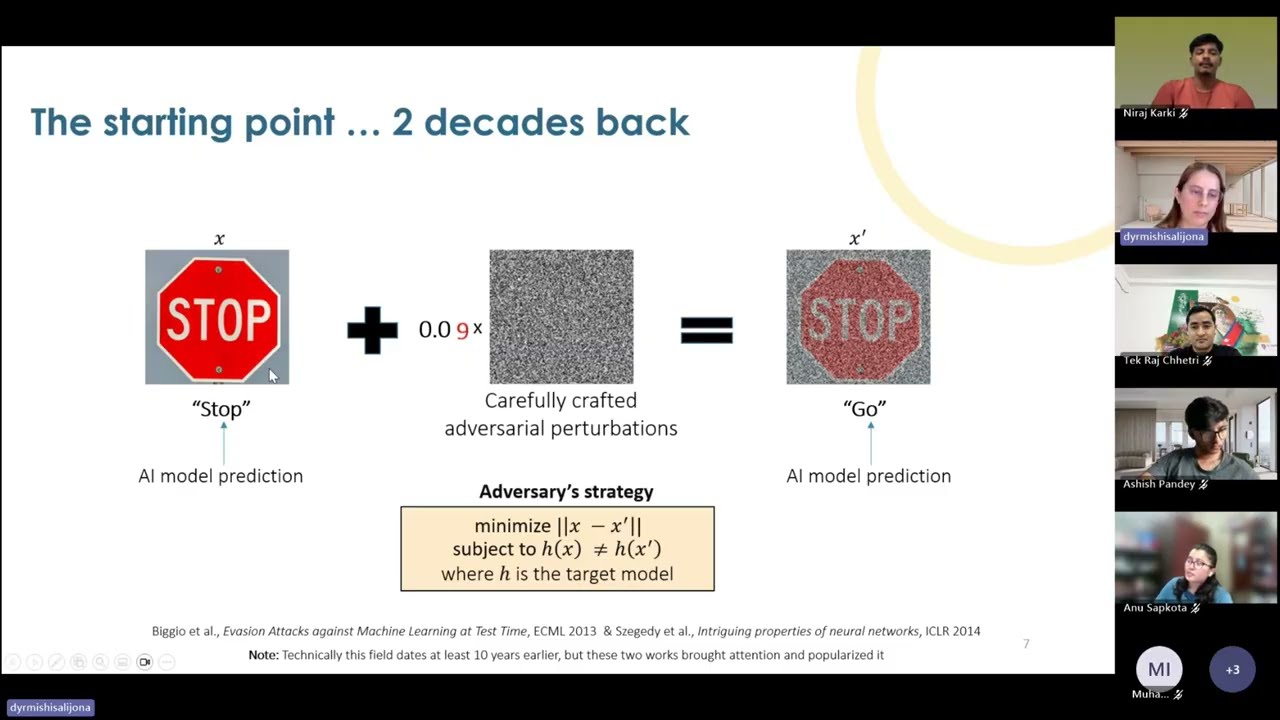
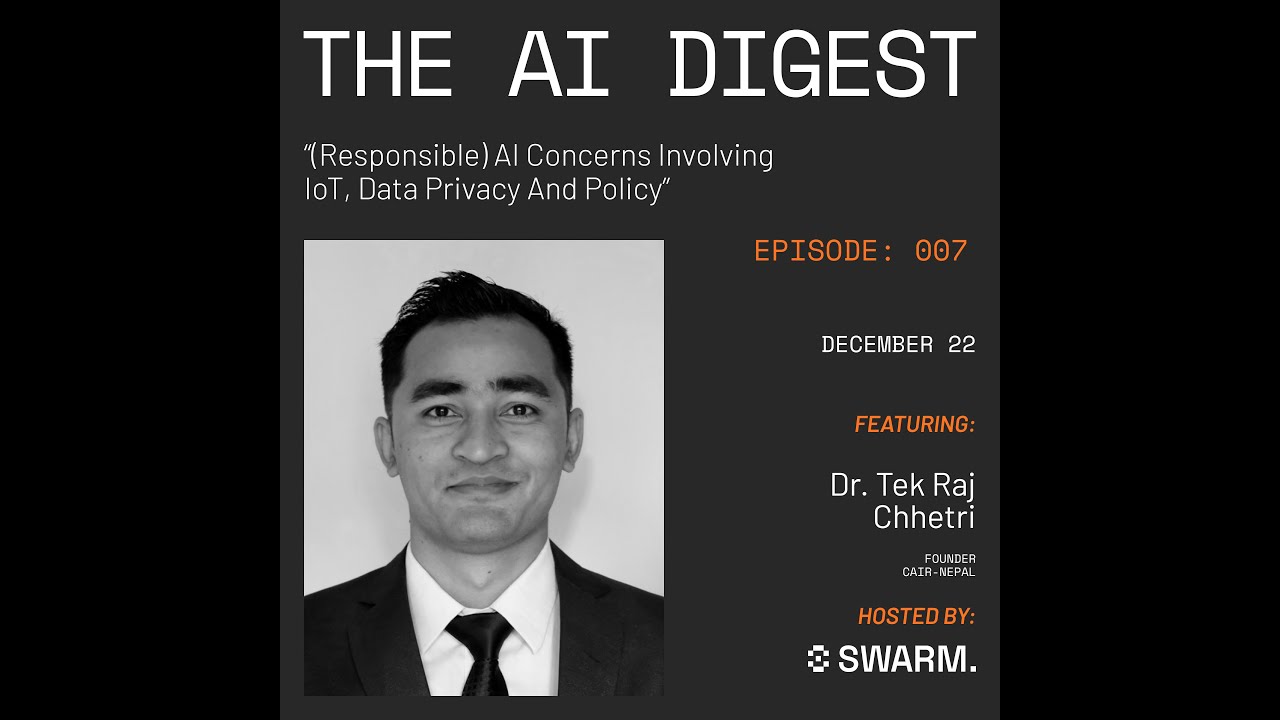
Talks, recordings, and press covering our research and community work.
YouTube Video
CAIR-Nepal and SWARM Present: A Podcast on Responsible AI, Data Privacy, and IoT with Dr. Tek Raj Chhetri
Watch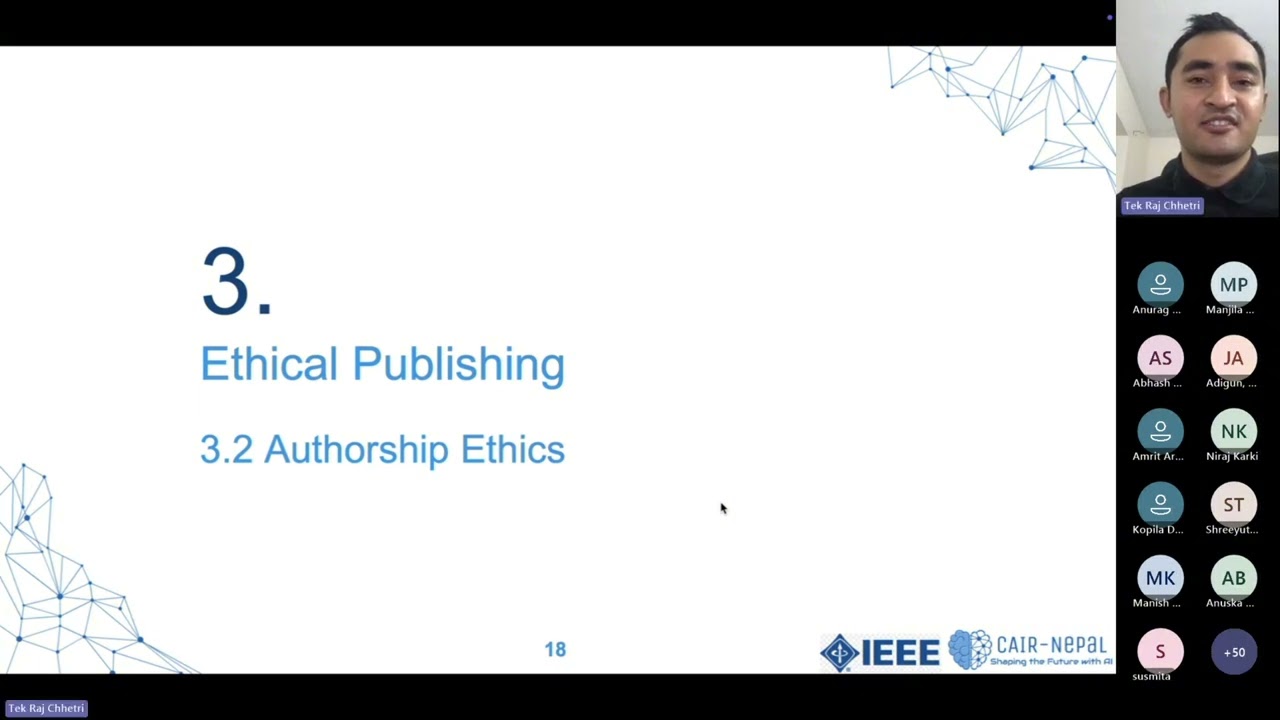
08 Diversity & inclusion
Unity in diversity
Our Commitment to Diversity & Inclusion
“Feelings of worth can flourish only in an atmosphere where individual differences are appreciated, mistakes are tolerated, communication is open, and rules are flexible – the kind of atmosphere that is found in a nurturing family.” — Virginia Satir
CAIR-Nepal adopts the diversity values of the multilingual, multi-ethnic, and multi-cultural Nepalese society, whose core value is unity in diversity [सयौं थुँगा फूलका हामी, एउटै माला नेपाली...]. Therefore, CAIR-Nepal staunchly upholds these culturally rooted principles of diversity and inclusion. CAIR-Nepal is a firm believer that individuals from various walks of life, cultures, and backgrounds bring a unique perspective, and that is necessary for innovation. CAIR-Nepal is also firmly committed to the right to fair treatment and equal opportunity, regardless of race, gender, sexual orientation, age, ethnicity, or opinion held. Furthermore, CAIR-Nepal is committed to providing opportunities to the underrepresented and protecting the vulnerable.
Note: Supporting diversity should never be mistaken as a substitute for talent. Diversity initiatives aim to recognize and uplift talent from all backgrounds—not to replace merit, but to ensure that merit is not overlooked due to systemic barriers. Misrepresenting diversity as a trade-off for excellence undermines its true purpose and value.
Open communication
Equal opportunity
Inclusive research
Respectful community